What If My Mum Can Build It Too?

If my mum could build her own software, why would she pay for software again?
That question is the crux to much of the debates I’ve noticed being had about whether anyone will still build software for a living.
The arguement goes: if the average person can spin up a bespoke tool the moment they need one, they’ll never need to buy (or subscribe to) software made by a ‘professional’.
And to be honest, the strongest part of the that argument, to me, is the part about it being bespoke. Custom.
The nuanced point, often underexpressed, is that not only will my mum be able to vibe-code the tool she would have previously had to pay for, but that she will be able to have it specifically tailored to her individual needs and circumstances.
Someone who highlighted this to me, before I even started delving into the practical realities of this myself, was co-founder of 37signals:
Jason Fried.
On September 30th, 2026, Fried shared a post on X demonstrating some custom, personal software he had built in a weekend.
What Fried had built was a text editor - but one made specifically to facilitate his ideal form of writing exploration:
For years, maybe a decade, I've wanted to build a writing tool that just did a few things I couldn't find anywhere else.
A system that mimicked how I think when I write. A system that provided clear affordances, features, and places to do the things I wanted to do. A way to play with my writing as I’m writing it. A way to settle into just the right way to say something.
It never made sense to make it a 37signals product because it’s not commercially viable, nor would it be worth pulling people off their other work to hack on this. Plus, it would have taken months the old way.
So this weekend I just made it myself, with Claude’s help.
It’s called Write_On and the short video walks you through it.
Essentially it’s “alternative control” at the word, sentence, and paragraph level, plus a way to dim stuff back, and stash stuff near by. Not version control, but alternative control. You’ll see what I mean when you watch the video below.
So here it is. Write_On.
— Jason Fried (@jasonfried) September 30, 2026
Practically, this means giving users (writers) a way to attach different word choices to a particular word placement, with controls to easily switch between those options.
With this, writers can see different options for a word without writing over and losing their previous word choice. The same can also be done with sentences or even whole paragraphs!
Fried also added the feature that lets you “ghost” a selection of words or sentences - which dims it, letting you review the text that remains visible without entirely removing the text you ghosted. (Fried neatly names the feature that lets you bring the text back: “Reviving”).
What’s wonderful is that, in a way, this whole tool has been designed with a principle in mind: that writers should be able to visualise all of their options before committing to any one of them, so that they can make their most creative choice from those options.
(Man, Bret Victor would love this tool).
But this principle was highly personal to Fried. It was baked into his own experience of writing. He didn’t glean it from market research. He didn’t even really know if this was something others wanted. It was just an itch of his own that he wanted to scratch.
And the result is lots of replies just like this one:
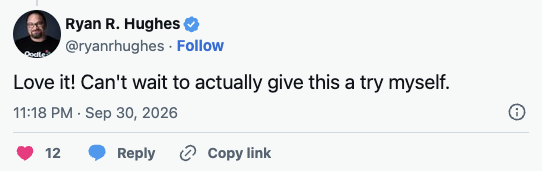
And yes, Jason, if you’re reading this - me too!
(In fact, if I had this tool, perhaps I wouldn’t have lazily used the word ‘options’ so many times).
But if the result is so good, surely most software should be built with a principle like this in mind right?
Well, in his post, Fried also shines a light on why his company, despite being a software company, didn’t previously make this tool:
It never made sense to make it a 37signals product because it’s not commercially viable, nor would it be worth pulling people off their other work to hack on this.
Ah yes, there’s no money in it.
Or more accurately, not obviously money in it.
The great blocker of any potential innovation: the fear of risk - of investing in something that doesn’t present itself as a sure thing.
But I think there’s also a greater tension that might explain why a company like 37signals can’t just suddenly stop and work on something that solves the founder’s personal problem.
It’s because software companies have always had every incentive to build something that scales well.
See, traditionally, software has been costly to build. So if you’re going to build it, you’re economically incentivised to find a way to make that investment ‘worth it’.
One such strategy has been to make it scalable: for that one piece of software to be useful to as many customers as possible.
That way, the costs of maintaining your solution don’t drastically go up with every customer you onboard because you’re catering to every customers every, unique need.
Wait, revenue increases without significant expense increase? Sign me up!!* - *Every investor of the past ~16 years.
Basically, scalable architecture protected the HUGE gross margins software companies could unlock, and the incredible valuation multiples that came along with that.
Scalable solutions also helped companies capture a market quickly, helping them build a moat around the status quo bias in those they served.
So again, why would a software company not put time and effort investing in features that are highly specific and personal?
Because their incentives fight directly against this.
In fact, when most companies organise their product development priorities on ‘impact’… what they really mean is how much a feature aligns with the incentive to appeal to the largest possible set of customers.
I’m not saying this as judgement; I’m just observing why a company like 37signals perhaps never prioritises a tool with a unique way of interacting with writing; and why your favourite software still hasn’t added that feature you asked for 3 years ago…
But wait no more!
Just build it yourself!
That’s the thing: when I came across Jason Fried’s post, my mind immediately opened up. The things I can build!!
Not in an ‘I just watched The Social Network and feel I too can conquer the world as a young nerd’ kind of way—
But more in a ‘I can make so many niche forms of software that no software company has ever been incentivised to work on’… kind of way (lol).
See, before I read this post (only around a month ago, wow), I was still quite overwhelmed by the seemingly endless possibilities and changes that AI was presenting us with.
But this post just put so many of those possibilities on ghost, and focused my attention entirely on the benefits of being able to build small, custom, and personal software.
However.
As is often the case with AI-related discoveries…
Just moments after my excitement arose, so did a sudden fear:
What does this mean for me as a designer of software?
I mean, sure, I can now make all the software ideas I’ve ever had - but, you know…
So can my mum!
And if my mum can… Then how will I get paid in the future?!
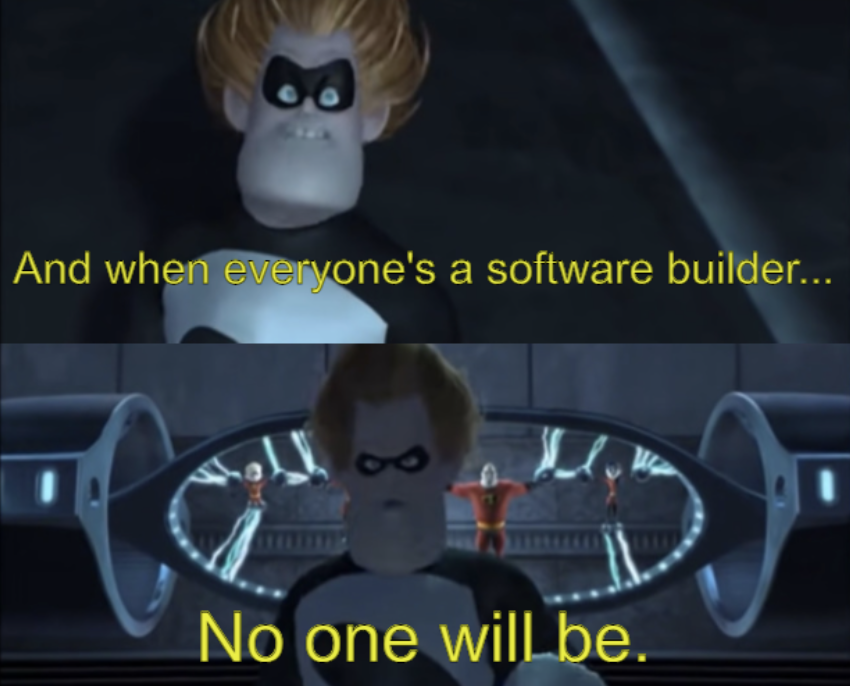
And now we’re back to the crux of the problem we started with: if the average consumer, who previously paid for software, can now just build it themselves… why would they pay for it? And what then happens to the economy of software, to the jobs of builders of software?
Enter behavioural economics.
As many, much smarter than me have pointed out in countless studies, we humans aren’t exactly rational consumers:
We’ve observed that people will pay over $17 a visit for a gym membership despite their being a $10 per visit option, because we are so bad at predicting how often we’ll actually go.1.
That shoppers will pay roughly three times as much for a branded aspirin as for the identical store brand.2
And that still buy extended warranties despite being advised not to, ending up costing us about as much as the repair they insure against, which many never even claim on.3
In each case, we’re not really buying the product. We’re buying a feeling about the product.
This is where it’s worth pointing out that just because someone could easily make their own software - doesn’t necessarily mean that they will.
One problem is that we software builders see the cost of developing software dropping and LEAP at the opportunity to build that one idea we’ve always had!
And since we’re surrounded by similar people (I see you Design Twitter); we automatically assume that everyone is equally excited by the prospect of building their own micro-software.
Until you actually do have a conversation with your mum — Yes, you’re allowed to do that—
And you find out that no… It’s not that exciting for her. And no, when she runs into a problem, she doesn’t think: is there a software solution for this that I could build?!
As Daniel Bernal points out:
Most people dont give a crap about building software. In fact, most people hate computers.
They just want the dishwasher to work and the app to open. Nobody’s spending their weekend chatting with Claude on their phone. They’re living their lives, and they want tech to stop getting in the way.
An analogy I want to bring up here, that I’ve sometimes seen on X, is how during the COVID pandemic, a lot of us learned to cut our own hair.
Doing so, naturally, saved us a lot of money.
And yet, as soon as barbershops and hairdressers reopened, many rushed right back into that leather seat, happy to exchange their cash for… well… what exactly?
Since I think there is an important insight here.
Before we answer that, let’s actually challenge this analogy.
Because sure, paying for software you could easily make yourself is kind of like cutting your own hair at home during the pandemic…
And sure, it’s kind of like going to a restaurant and paying for a meal you could cook yourself at home…
But I feel these analogies actually underplay the power of AI-leveraged software building.
Really, having Claude Code is not just having clippers, a hand mirror, and YouTube on your phone during the pandemic, but more like having a machine in your bathroom that you can pop on your head, describe to it the kind of haircut you want, and it would just give it to you in seconds.
I think this feels more apt for the nature of what’s been enabled by AI. It’s context aware, worldly in its knowledge, and carries with it the expertise that a lot of professionals do.
So back to my mum. This means whilst she might not be excited by the idea of building software, if she ever does think to build something, she doesn’t necessarily need the expertise to build something that’s workable.
Something that’s good enough.
And this is where a lot of people usually jump in and debate the standard level that AI might produce its output to - that good enough could be great if only a person with “taste” stepped in…
But to be honest, I’m less interested in exploring that nuance.
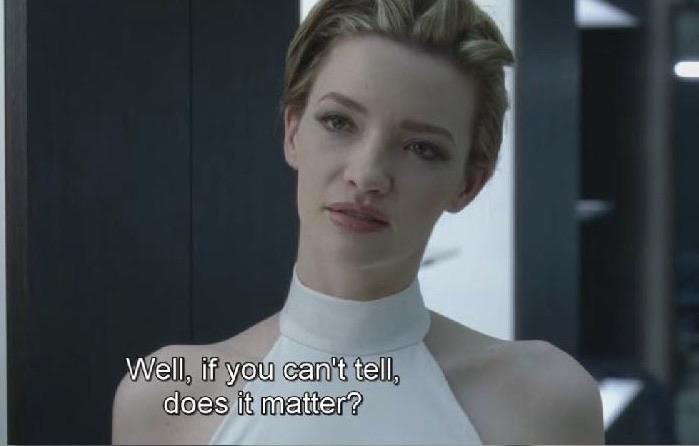
After all, if my mum can’t tell the difference…
Now there is one counterpoint from a famous study in behavioural economics that I’ve thought a lot about: the IKEA effect.
Researches have found that we value things more when we’ve put our own labour into them. In these studies, people who built IKEA boxes, folded origami and assembled Lego valued their creations above identical ones they hadn’t made. (Even judging their amateruish origami to be worth almost as much as an expert’s).
So maybe if I force my mum to sit down and spends a weekend vibe coding (sorry mum), then maybe she’d actually end up loving it more because she made it than anything else.
But the thing about the IKEA effect is that it really emphasises the effort part of the building…
Our instant haircut machine? It requires no effort. You simply describe what you want, and it appears.
So even if she loves it, does she trust it?
Jason Fried actually extended on the point about the average person’s lack of desire to build software in a blog post he wrote all the way back in March, 2026 (which is 10 years ago in AI years):
“Giving everyone access to software building tools doesn’t mean everyone becomes a builder. A powerful excavator doesn’t turn a homeowner into a contractor. Most people just want the hole dug. They don’t want the responsibility either.”
Jason Fried
And I think the key here is “They don’t want the responsibility either”.
To go back to the infinite haircut choice machine:
The problem with the machine is the void of responsibility it creates.
It’s just a tool! Everyone protests. Well guess what: if it’s a tool, then it’s your responsibility to have used it well.
And if your tool built something that you don’t know much about, are you going to feel solid about that? Or will the software made by someone else, by a professional, suddenly feel more attractive to you.
Why? Because I think the professional gives you something that the hairdresser gave you when you put down the clippers, even after being so proud that you had mastered grade 1 all over…
Reassurance.
We humans are mighty anxious beings. Irrational beings. And whilst we might like to think we returned to the barbershop because we prefer going out, or that the effort to cut our own hair was too great, or maybe that we even love the conversation we get to have during the haircut (I actually do)…
In the long run, the barber provides us with something far less tangible, but far deeper: Reassurance.
We cut our hair because we want to look good, and who better to give you the validation (and reassurance) that you look good and won’t be some social outcast than the guy who has seen 100s, if not 1000s, of haircuts?
Have you ever observed how quickly we will even hand over the responsibility of what kind of haircut will even look good on us if the barber expresses a different opinion to us, and we deem our barber to be an ‘expert’? A professional?…
We are uncertain creatures, living in a highly uncertain world. So anything we perceive to provide stability we grab onto - this is what explains the phenomena of Social Proof, Authority Bias, and Familiarity Bias to name a few.
We look for signals. Anything to reassure us that the decisions we’ve made are the right ones. That “whatever you are doing is okay. That you, are okay.” (…As Don Draper notes, advertising reassures).
So even if we love the sound of custom, personal software, we might just ask someone who is a professional in building such software to build it. To own the decisions, to absorb responsibility, and reassure the customer that this software has been made perfect for them.
That said, if I’m honest, I’m not even sure if this will stand the test of time. These days I’m more of a believer that the AI agents will become so good and so capable that when my mum tells hers about a problem she’s having: the agent will spin up the most ideal and most highly specific interface tailored to the needs around her problem, and the highly personal context about her overall preferences that it’s acquired about her by talking to her overtime.
So really, my conclusion at this time, is that I’m not certain that the role of the software builder who makes a living doing so will remain.
But what I’m highlighting is that the need for reassurance always will. And that’s something that in the mid-term at least, we can build for, we can design for in our solutions (whatever they look like).
We need to design for trust.